Noah Koshy
Designer · Sydney
Case № 02
Industry
Centelon Solutions
I single-handedly owned the end-to-end creation of a zero-code platform (ZCP) solution, which facilitated two-way conversion between Figma designs and Angular code, to accelerate the iterative process between design and development. It also provided a solution for designers to handle early-stage development; and allowed developers to handle early-stage and low- to mid-fidelity design.
RoleUX/UI Designer
TeamSolo
Timeline
I ownedIdeation, UI/UX Design, Development, Testing & Delivery
Note to self
A demo of the proof of concept of the solution built.
Play the video to hide the "Note to Self" sticky.
The sixty-second version
Problem
There was no existing solution to support the iterative handover between designers and developers, and no accelerator to support project delivery in place.
What I did
I developed a working proof of concept of a solution, presenting it to senior internal management and stakeholders in the business.
Result
I built this PoC single-handedly and remotely in under 4 months, checking in and conducting verifications with my manager throughout.
- Single-handedly completed
- I handled the full end-to-end process entirely by myself.
- Built and demonstrated a PoC
- Conducted regular check-ins to confirm successful progress.
- <4 months
- Achieved a successful result within a short timeframe.
↓
More details below if you want the reasoning.
§ 01
The Problem
There was no direct way to move work between Figma designs and Angular code, in either direction.
"A zero-code platform that functions as an accelerator would allow project iteration and delivery to be sped up significantly."
What I couldn't change
01
Completing the PoC and delivering it within the August – November 2025 timeframe.
02
Angular code was new to me, and the finalised solution had to be implemented through it.
03
Each stage needed approval before moving on to the next, from the plan to the low- and mid-fidelity designs.
§ 02
The Work
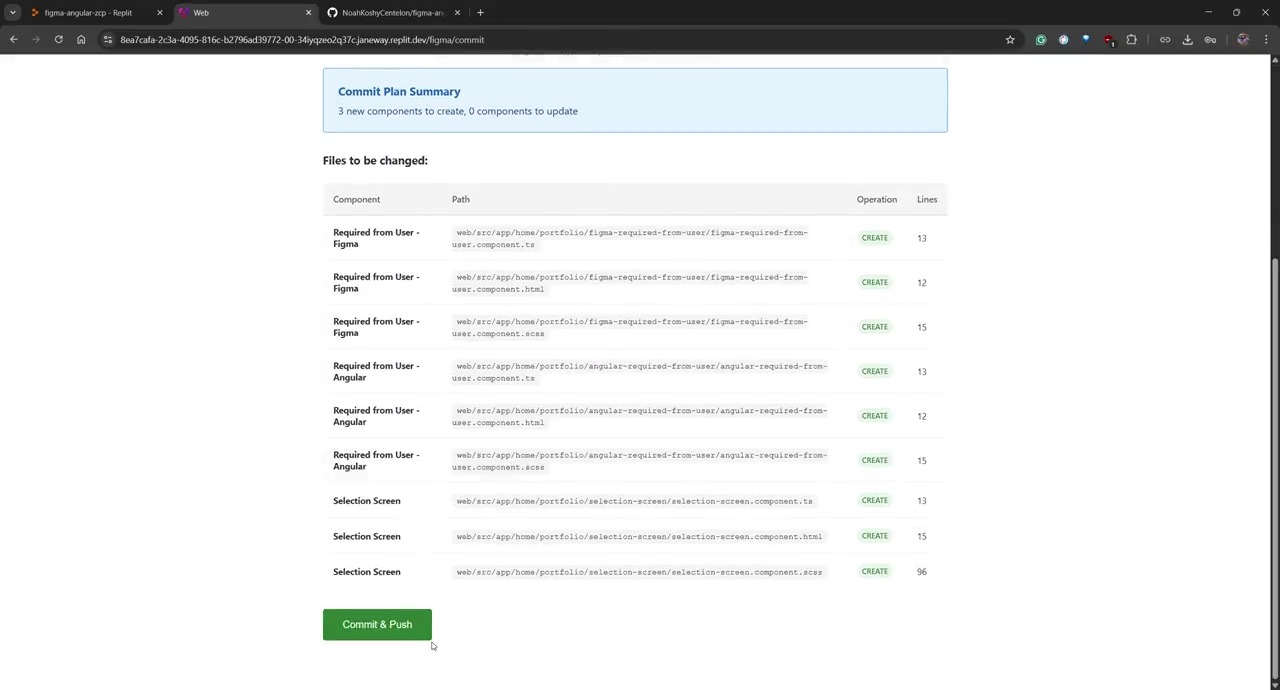
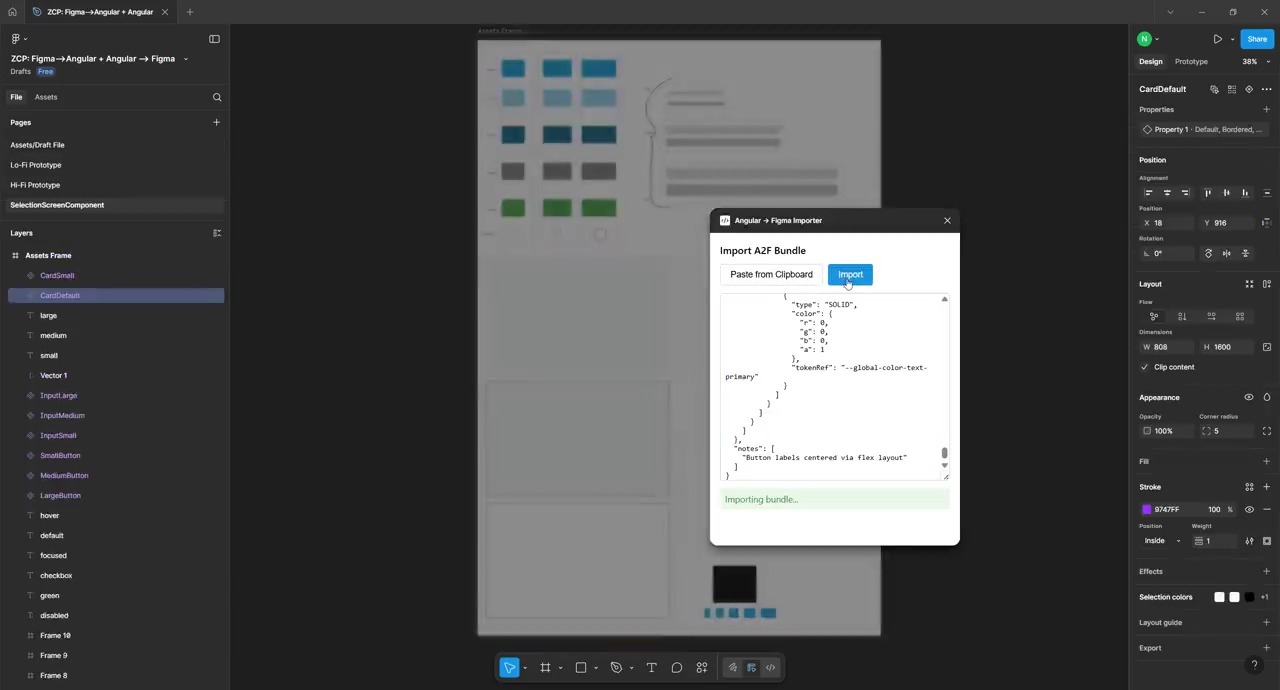
The proof-of-concept running end to end, from Figma to Angular and back again. The images are taken from the demo video at the top of the page.
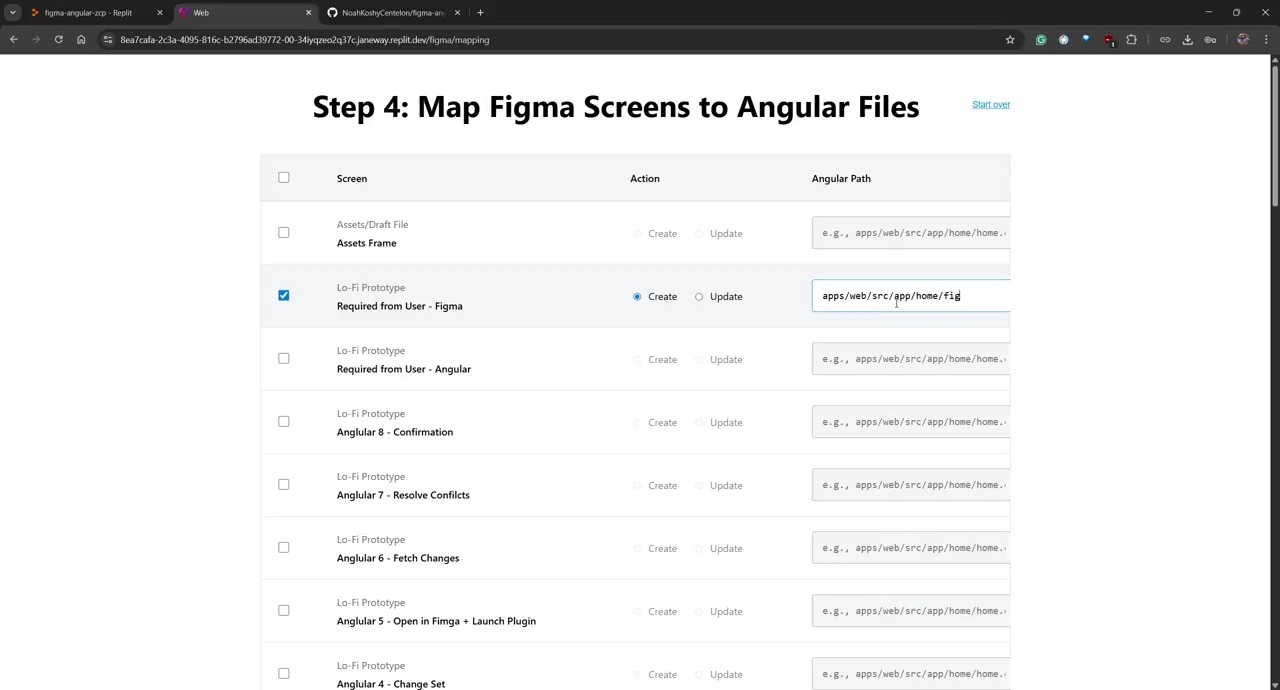
Plate 01. Mapping each Figma screen to an Angular file, and choosing whether it creates a new component or updates an existing one.
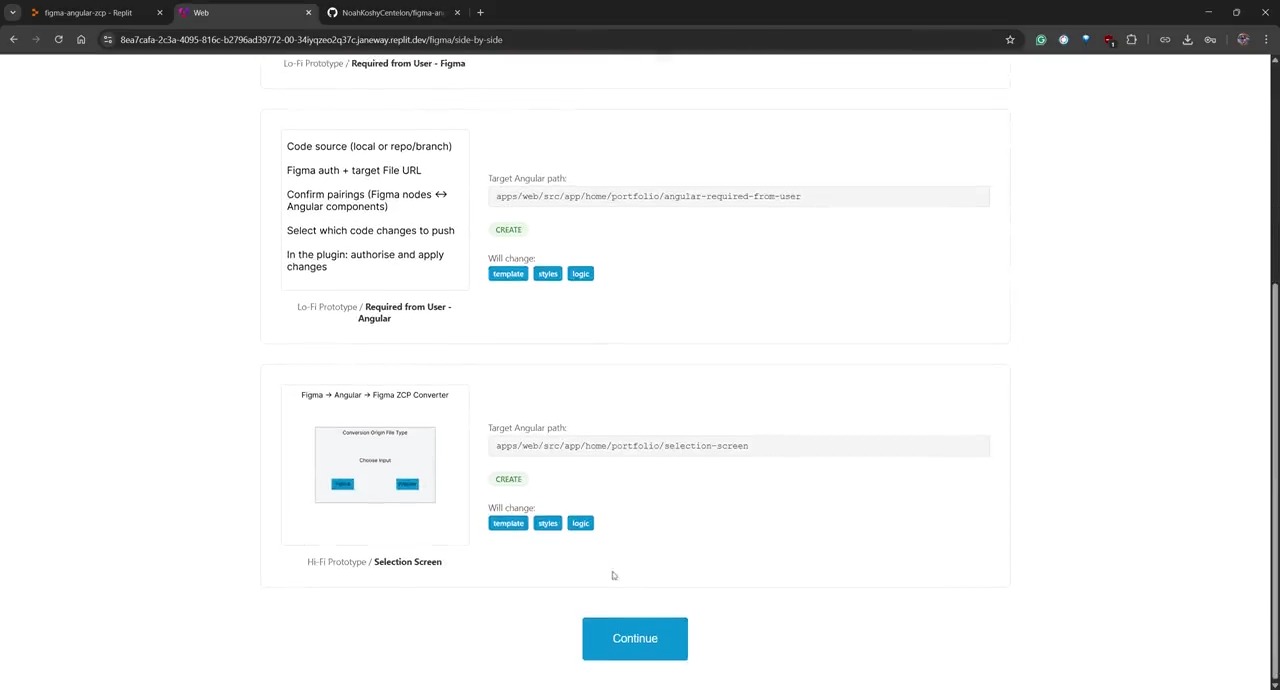
Plate 02. The side-by-side preview, showing every mapped screen next to the Angular path it will create, before any code is generated.
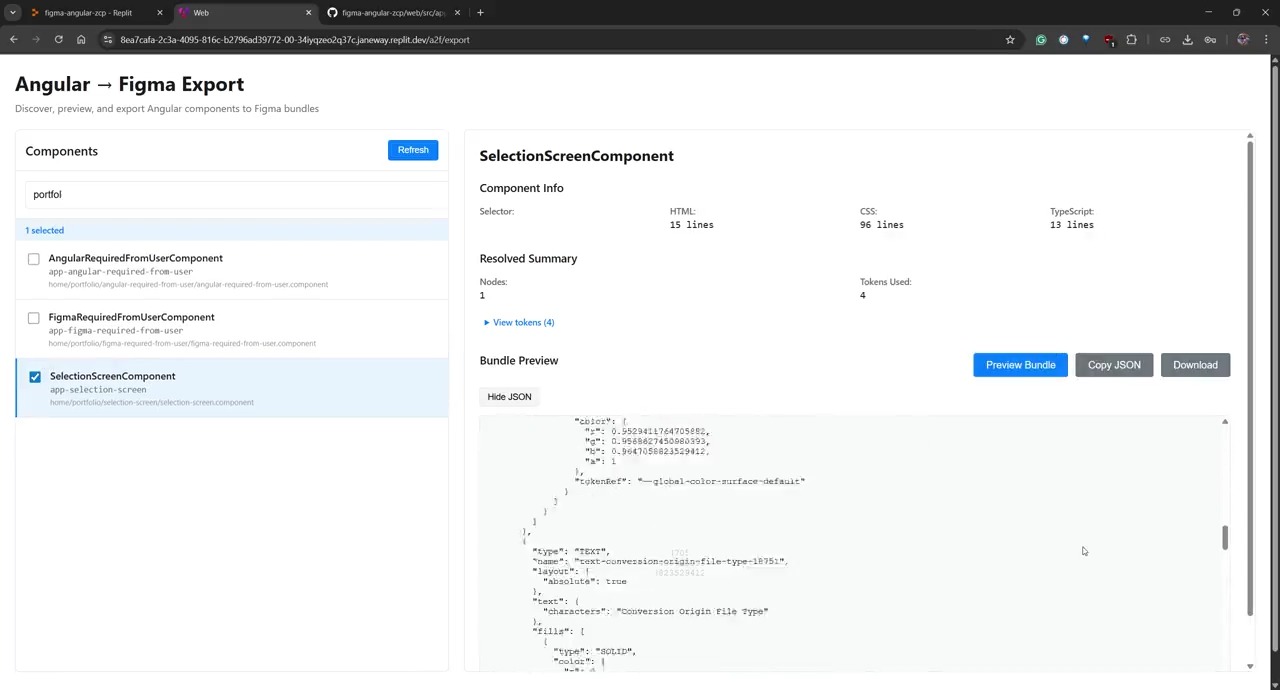
Plate 03. The reverse path, exporting Angular components back into Figma as a bundle, so the design file can be kept in line with the code.
§ 04 — Decisions & trade-offs
Determining what was needed for building a PoC and what would be left for a finalised build was a key consideration.
Two decisions, from planning the build through to how the conversion works.
01
/ 02
Decision 01
Getting each stage approved
Chose
Had the plan, the low-fidelity design and the mid-fidelity design each approved before moving on, and kept my manager informed of all plans and decisions.
Gave up
Some speed, as each stage waited on approval.
Why
It kept the output in line with the expectations of the project goals and intended functionalities, leading to a working proof-of-concept that I demonstrated to more senior executives.
Decision 02
Using Replit entirely for building
Chose
Used ChatGPT to identify and gather all of the requirements first, then as a prompt engineer to have Replit build the proof-of-concept.
Gave up
Time up front, spent gathering requirements before anything was built.
Why
Segmenting the workload across multiple tools used for specific purposes, supported better management of planning, context windows and task execution.
§ 05
Impact & what I'd change
A working proof-of-concept, demonstrated to senior executives.
Looking back
I successfully built a working proof-of-concept, demonstrating it to my manager and more senior executives, and received a positive LinkedIn recommendation from my manager as a result. With more time, I would have tested it throughout the process, with the designers and developers who would be using it.
— Noah
Consulting · UX/UI Designer
Zero-Code Platform
ChatGPT, Replit, Figma
© Noah Koshy, 2022-2026.
Centelon · Scrapbook-styled Portfolio